39 budha planet in astrology
Planets in astrology - Wikipedia In astrology, planets have a meaning different from the astronomical understanding of what a planet is.Before the age of telescopes, the night sky was thought to consist of two very similar components: fixed stars, which remained motionless in relation to each other, and moving objects/"wandering stars" (Ancient Greek: ἀστέρες πλανῆται, romanized: asteres planetai), which ... Mercury Astrology: Let's Communicate - GaneshaSpeaks Mercury - The Planet Of Communication Mercury is the nearest planet to the sun. Apart from the astronomical interest, the role of Mercury in astrology interests many Vedic researchers and astrologers. Coming to the planet as a vedic god, it is linked with fortune. Mercury or Budh will grant a good education, sharp mind and a charming appearance.
2022 Pradosh Dates | Pradosham Days for Redmond, Washington ... Planetary Positions Planet Transit Planet Combustion Planet Retrograde Eclipse Dates. ... Budha Pradosh Vrat. 08:16 PM to 10:12 PM. ... Astrology. Full Moon Dates ...

Budha planet in astrology
Budha - Wikipedia Budha (Sanskrit: बुध) is a Sanskrit word that connotes the planet Mercury. Budha, in Hindu legends, is also a deity. . He is also known as Soumya (Sanskrit: सौम्य, lit. son of Moon), Rauhineya and Tunga and is the Nakshatra lord of Ashlesha, Jyeshtha and Revati. Planet. Budha as a planet appears in various Hindu astronomical texts in Sanskrit, such as the 5th century ... Hindu astrology - Wikipedia Historical (medieval) Hindu astrology enumerated either 27 or 28 nakṣatras. In modern astrology, a rigid system of 27 nakṣatras is generally used, each covering 13° 20′ of the ecliptic. The missing 28th nakshatra is Abhijeeta. Each nakṣatra is divided into equal quarters or padas of 3° 20′. Of greatest importance is the Abhiśeka ... Classical planet - Wikipedia The term planet in modern terminology is only applied to natural satellites directly orbiting the Sun (or other stars), so that only five of the seven classical planets are planets in the modern sense. The same seven planets, along with the ascending and descending lunar node, are mentioned in Vedic astrology as the nine Navagraha
Budha planet in astrology. Hindu (Indian / Vedic) Astrology Today - The Planets Today Jyotisha is the traditional Hindu system of astrology, also known as Hindu astrology, Indian astrology, and more recently Vedic astrology. The term Hindu astrology has been in use as the English equivalent of Jyotiṣa since the early 19th century, whereas Vedic astrology is a relatively recent term, entering common usage in the 1980s. Classical planet - Wikipedia The term planet in modern terminology is only applied to natural satellites directly orbiting the Sun (or other stars), so that only five of the seven classical planets are planets in the modern sense. The same seven planets, along with the ascending and descending lunar node, are mentioned in Vedic astrology as the nine Navagraha Hindu astrology - Wikipedia Historical (medieval) Hindu astrology enumerated either 27 or 28 nakṣatras. In modern astrology, a rigid system of 27 nakṣatras is generally used, each covering 13° 20′ of the ecliptic. The missing 28th nakshatra is Abhijeeta. Each nakṣatra is divided into equal quarters or padas of 3° 20′. Of greatest importance is the Abhiśeka ... Budha - Wikipedia Budha (Sanskrit: बुध) is a Sanskrit word that connotes the planet Mercury. Budha, in Hindu legends, is also a deity. . He is also known as Soumya (Sanskrit: सौम्य, lit. son of Moon), Rauhineya and Tunga and is the Nakshatra lord of Ashlesha, Jyeshtha and Revati. Planet. Budha as a planet appears in various Hindu astronomical texts in Sanskrit, such as the 5th century ...
Budha - Wikipedia

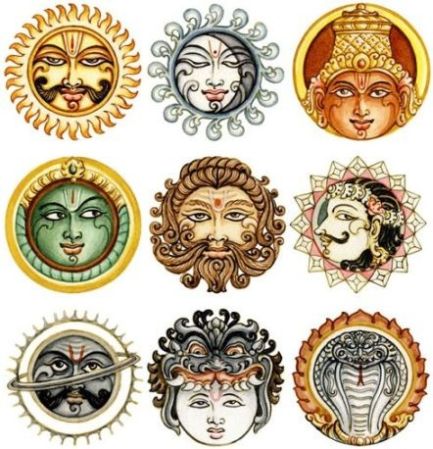
Navagraha Nine Planets Hindu Astrology

Sun & Mercury Conjunction (Budhaditya Yoga) - Vedic Raj Astrology

Insight: Vedic Astrology: A Masterful Synopsis Of The Science ...

Mercury in Seventh House – Mercury Planet in 7th House: Vedic ...

Mercury (Budh) - Best Astrologer

Budh Dosh – Introduction, Causes, Effects, Remedies and More ...

Remedies for Nine Planets in Astrology - School of wisdom and ...

Story Of The Birth Of Budh Graha - The Story Of Budha Graha ...

Benefits of Praying to Lord Budh (Mercury) on Wednesday
Why does planet Mercury hate his father, the planet Moon? - Quora
Remedies for malefic planets in horoscope - Astrology

How To Strengthen Mercury( Budh Garah) With Everyday Remedies ...

Mercury Direct In Taurus June 3 Budh Margi will have a ...

Budh or Mercury is the closest planet to Sun and orbits near ...

The Planet Mercury in Astrology – Characteristics ...

Mercury (Budha) in Vedic Astrology - Northern Lights Vedic

Lord Budha, Planet Mercury ,Hindu God Budha - AstroVedPedia

Lord Budha, Planet Mercury ,Hindu God Budha - AstroVedPedia

Mercury & Education In Astrology

Things to know about Mercury (Budh) Planet in Vedic Astrology ...

Planet Mercury - Importance of Mercury in Vedic Astrology

Mercury Enters In Aquarius, Brings Monumental Changes In Life!

Remedies for Planet Mercury - Tips to appease Budh Dev

Mercury In 8th House Love, Sex, Marriage, Career, Finance ...

Budha graha | Devta

The Astrology Planet Mercury (Budh Graha) - India Parenting

Vedic Astrology – The Navagrahas – Shriguru Maharishi

Planet Mercury (Buddha)In Astrology -

What Do Planets Represent in Vedic Astrology? A Guide to Each ...

Mercury (Budha) in Vedic Astrology - Northern Lights Vedic

Did you know that every finger in your hand is connected to a ...

Planets In Astrology And Their Impacts On Your Life ...

Mercury Retrograde 2022: Effect on zodiac signs of Budh Vakri ...

Planets and Astrology-The Mercury

Effects And Remedies For A Weak Mercury - Boldsky.com

Benefits Of Mercury In Astrology And Its Significance In Houses

Mercury Remedies - How to Strengthen the Planet Mercury in ...

Mercury and Responsibility – Fourth Dimensional Astrology
0 Response to "39 budha planet in astrology"
Post a Comment